


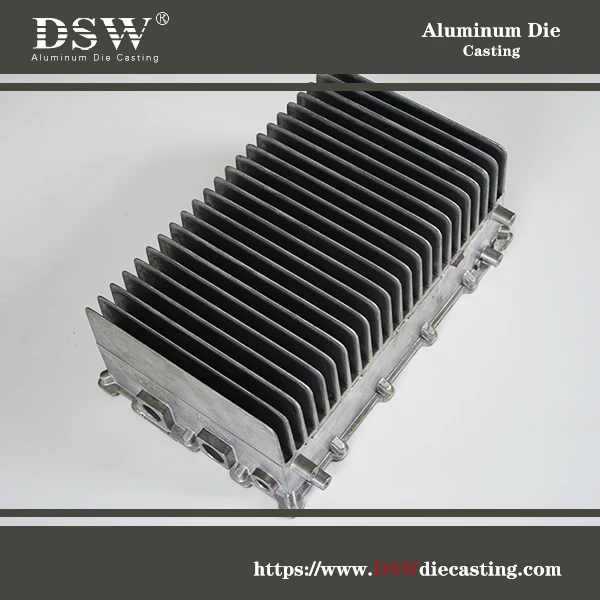
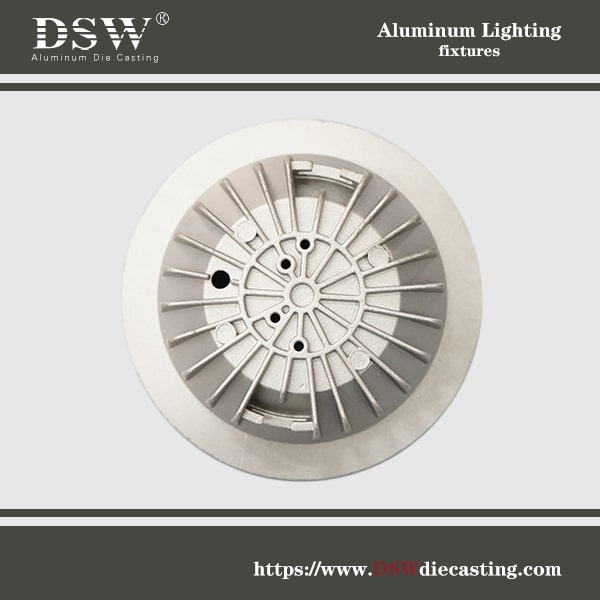
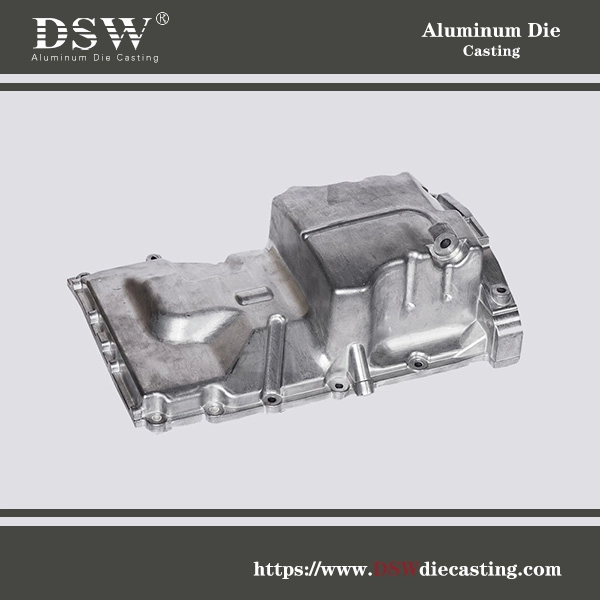
Aluminum Die Casting Manufacturer
High Precision, Superior Properties, sizes range from 2 cm to 2 meters, with weights from 10 g to 38 kg.
Aluminum die casting is a manufacturing process used to produce complex aluminum components by injecting molten aluminum alloy into a reusable steel die under controlled pressure. The process can produce repeatable parts with complex geometries, relatively thin walls, good dimensional consistency, and efficient production cycles.
This aluminum die casting guide explains how the process works, from part design and alloy selection to die design, metal injection, solidification, trimming, machining, surface finishing, and inspection. It also explains common aluminum die casting alloys, design considerations, casting defects, tooling, applications, advantages, limitations, and production costs.
Understanding the aluminum die casting process is important for engineers, product designers, purchasing teams, and manufacturers because decisions made during product design can significantly affect tooling complexity, casting quality, machining requirements, production cost, and long-term manufacturing reliability.
Aluminum Die Casting Manufacturing
With 16 die casting machines, DSW Industry can handle both small-batch runs and large-scale production.
This wide range allows for greater flexibility in part size, complexity, and material requirements.
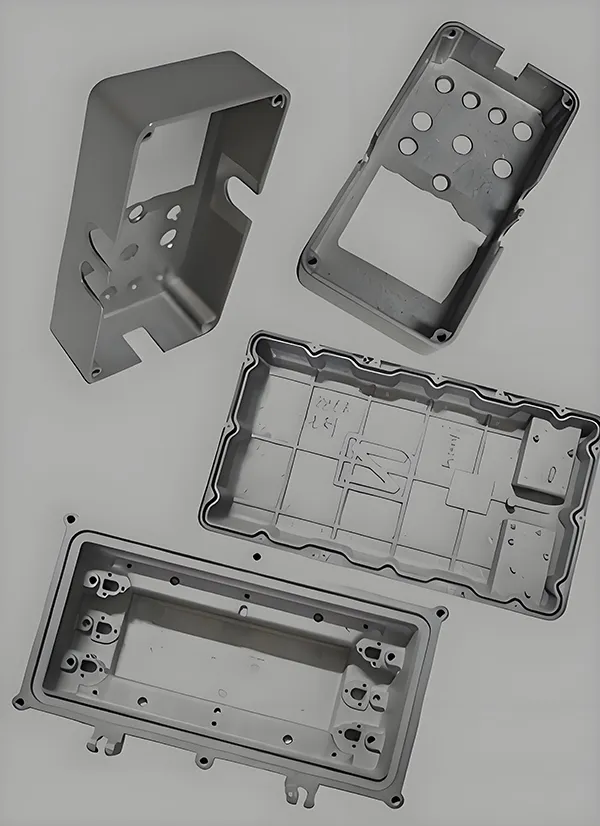
What Is Aluminum Die Casting ?
Industries benefit from flexibility, stability, cost-efficiency, and diverse coatings.
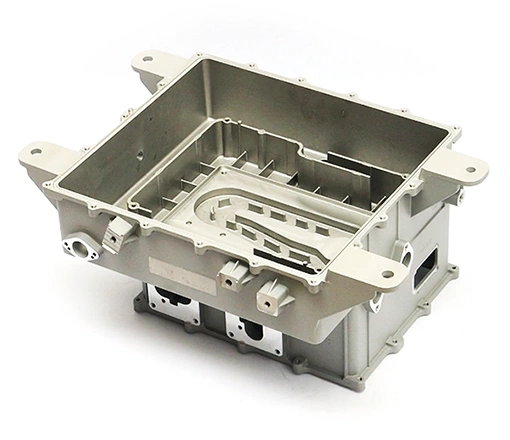
Aluminum die casting is a pressure-assisted metal casting process in which molten aluminum alloy is injected into a reusable steel die. The die contains the negative geometry of the required component. Once the aluminum fills the cavity and solidifies, the die opens and ejector pins remove the casting.
Unlike sand casting, where a mold is generally discarded after each casting, a die casting die is designed for repeated production. This makes the process particularly suitable for medium- and high-volume manufacturing.
The process can produce components with:
- Complex three-dimensional geometries
- Thin walls where the alloy and process allow
- Ribs and bosses
- Mounting features
- Integrated housings
- Curved surfaces
- Internal cavities and other detailed features
Aluminum is commonly selected because it combines relatively low density with useful mechanical properties, corrosion resistance, thermal conductivity, electrical conductivity, and good machinability for many applications.
The term aluminum die casting is common in American English, while aluminium die casting is widely used in British English and other international markets. Both refer to the same basic manufacturing process.
How Does the Aluminum Die Casting Process Work ?
Perfect for lighting, automotive, electronics, home appliances, and more.
The basic aluminum die casting process uses a machine to force molten aluminum into a steel die at controlled speed and pressure.
A simplified process flow is:
Part Design → Alloy Selection → Die Design → Die Manufacturing → Aluminum Melting → Die Preparation → Injection → Filling and Solidification → Die Opening → Ejection → Trimming → Inspection → Machining and Finishing
Although this sequence looks straightforward, successful production depends on the interaction between part geometry, alloy characteristics, die design, machine parameters, temperature control, cooling, venting, and inspection.
Aluminum Die Casting Process Steps
1. Part Design
The process begins with the product design. Engineers review the 3D CAD model and engineering drawings to determine whether the component is suitable for die casting.
Important design considerations include:
- Wall thickness
- Draft angles
- Parting line
- Ribs and bosses
- Fillets and radii
- Undercuts
- Machining allowance
- Dimensional tolerances
- Datum references
- Gating and filling requirements
Designing specifically for the casting process can reduce tooling complexity and improve production consistency.
2. Aluminum Alloy Selection
The alloy is selected according to the functional requirements of the component.
Important material considerations include:
- Strength
- Ductility
- Corrosion resistance
- Castability
- Machinability
- Thermal conductivity
- Electrical conductivity
- Wear resistance
- Pressure tightness
- Surface finishing requirements
Common aluminum die casting alloys include A380, A360, A413, and ADC12, although the appropriate designation depends on the applicable material standard and market.
3. Die Design
After the part design and material requirements are established, the casting die is engineered.
The die normally incorporates:
- Cavity and core surfaces
- Runners
- Gates
- Vents
- Overflows
- Cooling channels
- Ejector pins
- Slides or other moving components when required
Die design determines how molten aluminum enters, flows through, cools, and solidifies inside the cavity.
4. Die Manufacturing
The die is manufactured from suitable tool materials and machined to produce the required cavity geometry.
Depending on the component, tooling may include fixed and moving die halves, inserts, slides, cores, cooling passages, ejector systems, and other components.
5. Aluminum Melting
Aluminum alloy is heated in a melting furnace until it reaches the required molten condition.
Temperature control and melt cleanliness are important because excessive temperature, contamination, or improper material handling can affect casting quality.
6. Die Preparation
The die is cleaned, prepared, and brought to an appropriate operating temperature before production.
Die lubrication may be applied to assist release and manage thermal conditions. Cooling channels are also used to control die temperature during production.
7. Metal Injection
The molten aluminum is transferred into the shot sleeve and injected into the die cavity.
Injection speed and pressure are controlled according to the component, alloy, die design, and machine configuration.
8. Cavity Filling
The molten metal travels through the runner and gate system and fills the cavity.
The filling pattern is influenced by:
- Gate location
- Injection velocity
- Metal temperature
- Die temperature
- Wall thickness
- Part geometry
- Venting
Proper filling design helps reduce problems such as cold shuts, incomplete filling, excessive turbulence, and gas entrapment.
9. Solidification
After the cavity has been filled, the aluminum begins to solidify as heat is transferred into the die.
Cooling-channel design and thermal management are particularly important because uneven cooling can contribute to dimensional variation, residual stress, or casting defects.
10. Die Opening and Ejection
After the casting has sufficiently solidified, the die opens and the ejector system removes the component.
The casting normally includes additional material such as gates, runners, and overflows.
11. Trimming
Excess material is removed from the casting. Trimming can be performed using dedicated trimming equipment, machining, or another appropriate process.
12. Inspection
The casting is inspected according to the agreed quality requirements.
Inspection may include:
- Visual inspection
- Dimensional inspection
- Material verification
- CMM measurement
- Gauge inspection
- X-ray inspection
- Other non-destructive testing
13. CNC Machining and Finishing
Critical features can be machined after casting. Surface finishing can then be applied when required.
This combination allows the casting process to produce most of the component geometry while CNC machining is used for selected precision features.
Types of Aluminum Die Casting
High-Pressure Die Casting
High-pressure die casting (HPDC) uses high-speed injection to force molten aluminum into a reusable steel die.
It is widely used for complex components produced in medium and high quantities.
Typical applications include:
- Automotive housings
- Motor housings
- Transmission components
- Electronic enclosures
- Lighting housings
- Industrial equipment components
Vacuum Die Casting
Vacuum-assisted die casting removes or reduces air from the die cavity before or during filling.
This approach can help reduce gas-related porosity and may be considered for components requiring improved structural integrity or pressure tightness.
Squeeze Casting
Squeeze casting applies significant pressure during solidification. It can produce relatively dense components and may be considered for applications requiring specific mechanical properties.
Semi-Solid Casting
Semi-solid processes use aluminum in a partially solidified condition. The different flow behavior can provide particular advantages for selected applications.
The appropriate casting technology depends on part geometry, production volume, mechanical requirements, alloy, tooling investment, and quality requirements.
Aluminum Die Casting Alloys
Aluminum alloy selection has a direct effect on casting performance and final part properties. Engineers should select an alloy based on the complete application rather than simply choosing the most common alloy.
A380 Aluminum
A380 is a commonly used aluminum die casting alloy. It provides a practical combination of castability, strength, corrosion resistance, and machinability for many industrial components.
Typical applications include:
- Automotive components
- Motor housings
- Gear housings
- Brackets
- Industrial equipment
- Electronic housings
A360 Aluminum
A360 is used for applications where the required balance of strength, corrosion resistance, and pressure tightness differs from that of general-purpose alloys.
A413 Aluminum
A413 provides good castability and can be considered for components requiring useful wear and corrosion characteristics.
ADC12
ADC12 is widely used in Asian manufacturing markets and is frequently specified for aluminum die casting components.
It is commonly used for:
- Automotive components
- Motor housings
- Electronic housings
- Industrial components
- Machinery parts
Different markets may use different alloy designation systems. The material specification should therefore identify the applicable standard rather than relying only on a commercial alloy name.
For a more detailed comparison, see the Aluminum Alloys Comparison Guide.
Aluminum Die Casting Design Guidelines
Good aluminum die casting design begins before the die is manufactured. Design decisions influence filling, cooling, tooling complexity, machining, inspection, and production cost.
Wall Thickness
Uniform wall sections are generally easier to fill and cool consistently than designs containing large variations in thickness.
Very thick sections can increase the risk of internal porosity or shrinkage-related problems, while extremely thin sections may create filling challenges.
The appropriate wall thickness depends on alloy, geometry, flow length, machine capability, and process design.
Draft Angle
Draft allows the casting to separate from the die without damaging the component or tooling.
The required draft depends on the depth and geometry of the feature, surface finish, alloy, tooling design, and whether the surface is formed by a core or cavity.
Fillets and Radii
Sharp internal corners can create stress concentrations and complicate metal flow and die manufacturing. Appropriate radii generally improve casting manufacturability.
Ribs
Ribs can increase stiffness without requiring the entire component to have a thick wall. However, overly thick ribs can create local differences in solidification behavior.
Bosses
Bosses are commonly used for mounting, fastening, and locating components. Their geometry should be designed with draft, wall thickness, cooling, and machining requirements in mind.
Parting Line
The parting line is where the die separates. It should be considered early because it affects tooling complexity, ejection, flash, trimming, and component appearance.
Undercuts
Undercuts may require slides, lifters, cores, or inserts. These features can increase tooling complexity and maintenance requirements.
Machining Allowance
Critical surfaces should not always be forced to their final dimensions during casting. Where tighter tolerances are required, the design can include appropriate machining allowance for subsequent CNC operations.
GD&T and Datums
Functional dimensions, datums, geometric tolerances, and inspection requirements should be established on the engineering drawing before production tooling is finalized.
Aluminum Die Casting Tooling
The die is a reusable precision tool that forms the external and internal geometry of the casting.
Main Die Components
- Fixed die half
- Moving die half
- Cavity inserts
- Core inserts
- Slides
- Ejector pins
- Runners
- Gates
- Vents
- Overflows
- Cooling channels
Why Tooling Design Matters
Tooling design affects:
- Filling behavior
- Cooling performance
- Cycle time
- Surface quality
- Dimensional stability
- Flash
- Porosity
- Die life
- Maintenance requirements
A die casting supplier should therefore evaluate the component design before tooling production begins.
Common Aluminum Die Casting Defects
Aluminum die casting defects can result from material, tooling, machine parameters, thermal conditions, filling behavior, or part geometry. Corrective action should be based on the actual defect mechanism.
Porosity
Porosity refers to internal voids within a casting. Gas porosity may result from trapped air or gas, while shrinkage-related porosity can occur during solidification.
Potential controls include improved venting, optimized filling, appropriate melt handling, thermal control, and suitable gating and overflow design.
Cold Shut
A cold shut can occur when separate metal flow fronts meet without sufficient fusion. Metal temperature, filling speed, flow path, and die temperature can all affect this condition.
Flash
Flash is excess metal that enters the clearance between die components or along the parting line.
Excessive flash may be associated with die alignment, die wear, clamping conditions, or process parameters.
Incomplete Filling
Incomplete filling occurs when the molten aluminum solidifies before the cavity has been completely filled.
Possible contributing factors include:
- Insufficient metal temperature
- Low die temperature
- Inappropriate injection speed
- Unfavorable gate location
- Long flow paths
- Insufficient venting
Shrinkage
Aluminum changes volume during solidification. Differences in section thickness and cooling can contribute to shrinkage-related defects.
Surface Defects
Surface defects can include flow marks, blisters, cracks, inclusions, soldering, and other irregularities.
The correct solution depends on the cause. Surface finishing should not be used simply to hide an underlying casting problem.
Common Aluminum Die Casting Defects
Aluminum die casting defects can result from material, tooling, machine parameters, thermal conditions, filling behavior, or part geometry. Corrective action should be based on the actual defect mechanism.
Porosity
Porosity refers to internal voids within a casting. Gas porosity may result from trapped air or gas, while shrinkage-related porosity can occur during solidification.
Potential controls include improved venting, optimized filling, appropriate melt handling, thermal control, and suitable gating and overflow design.
Cold Shut
A cold shut can occur when separate metal flow fronts meet without sufficient fusion. Metal temperature, filling speed, flow path, and die temperature can all affect this condition.
Flash
Flash is excess metal that enters the clearance between die components or along the parting line.
Excessive flash may be associated with die alignment, die wear, clamping conditions, or process parameters.
Incomplete Filling
Incomplete filling occurs when the molten aluminum solidifies before the cavity has been completely filled.
Possible contributing factors include:
- Insufficient metal temperature
- Low die temperature
- Inappropriate injection speed
- Unfavorable gate location
- Long flow paths
- Insufficient venting
Shrinkage
Aluminum changes volume during solidification. Differences in section thickness and cooling can contribute to shrinkage-related defects.
Surface Defects
Surface defects can include flow marks, blisters, cracks, inclusions, soldering, and other irregularities.
The correct solution depends on the cause. Surface finishing should not be used simply to hide an underlying casting problem.
Surface Finishing for Aluminum Die Castings
Aluminum die castings can be used in the as-cast condition for some applications, while others require additional surface treatment.
Common Surface Finishes
- Deburring
- Shot blasting
- Tumbling
- Polishing
- Powder coating
- Painting
- Anodizing
- Plating
Powder Coating
Powder coating can provide a durable decorative and protective surface for many industrial components.
Anodizing
Anodizing creates a controlled oxide layer on aluminum. However, die cast alloys do not all respond to anodizing in the same way, so alloy selection and casting quality should be evaluated before specifying the process.
Polishing
Polishing can improve surface appearance and smoothness where the geometry and casting quality are suitable.
Surface finishing requirements should be considered during material and product design rather than added at the end of the manufacturing process.
CNC Machining After Die Casting
Die casting and CNC machining are often used together.
Die casting produces the majority of the component geometry efficiently, while CNC machining provides higher precision on selected functional features.
Common Machined Features
- Precision holes
- Threaded holes
- Bearing bores
- Sealing surfaces
- Mounting surfaces
- Datum surfaces
- Precision pockets
Typical operations include:
- CNC milling
- Drilling
- Tapping
- Reaming
- Boring
- Facing
The objective is normally to minimize unnecessary machining while ensuring that critical functional dimensions meet the required tolerances.
See CNC Machining Services for more information about machining capabilities.
Quality Control and Inspection
Quality should be controlled throughout the aluminum die casting process rather than relying exclusively on final inspection.
Material Control
Material verification can include alloy identification, chemical composition testing, material certificates, and traceability where required.
Process Control
Important production variables may include:
- Metal temperature
- Die temperature
- Injection speed
- Injection pressure
- Holding pressure
- Cooling conditions
- Cycle time
Dimensional Inspection
Depending on the component, dimensional inspection may use:
- Calipers
- Micrometers
- Height gauges
- Gauges
- Optical measurement
- CMM equipment
X-Ray Inspection
X-ray inspection can be used for selected components to evaluate internal conditions such as certain forms of porosity and internal discontinuities without destroying the component.
First Article Inspection
For new products, first-article inspection can be used to verify that the production process is capable of producing components according to the agreed drawing and specifications before larger-scale production.
Applications of Aluminum Die Casting
Automotive
- Motor housings
- Transmission housings
- Brackets
- Electrical housings
- Structural components
- Battery-related housings
Electronics
- Electronic enclosures
- Motor housings
- Heat sinks
- Connector housings
- Electrical equipment housings
Lighting
- LED housings
- Street light housings
- Floodlight housings
- Heat-dissipation components
Industrial Equipment
- Gear housings
- Pump components
- Machine housings
- Industrial brackets
- Equipment covers
Medical Equipment
Aluminum die castings can also be used for selected medical equipment housings and mechanical components where the required material, surface, dimensional, and regulatory requirements are compatible with the process.
Advantages and Limitations of Aluminum Die Casting
Advantages
- Suitable for complex geometries
- High production efficiency
- Good dimensional repeatability
- Good strength-to-weight characteristics
- Reduced machining compared with manufacturing a complete component from solid material
- Suitable for integrated ribs, bosses, and housings
- Compatible with CNC machining
- Compatible with many surface finishing processes
- Suitable for medium- and high-volume production
Limitations
- Initial tooling investment can be significant
- Tooling requires maintenance
- Very low-volume production may not justify dedicated tooling
- Complex undercuts can increase tooling complexity
- Conventional high-pressure die casting can have internal gas porosity
- Some tight tolerances require CNC machining
- Alloy selection can limit certain finishing processes
Aluminum Die Casting Cost Factors
The cost of an aluminum die casting project depends on the component, tooling, production volume, material, secondary operations, and quality requirements.
Main Cost Factors
- Part size and weight
- Aluminum alloy
- Part geometry
- Production volume
- Die complexity
- Number of cavities
- Slides and cores
- Machining requirements
- Surface finishing
- Inspection requirements
- Packaging
- Tool maintenance
Tooling Cost and Unit Cost
A typical project has an initial tooling investment followed by production costs.
Total Project Cost = Tooling + Casting Production + Machining + Finishing + Inspection + Packaging + Logistics
As production volume increases, the initial tooling cost can be distributed across more parts. This is one reason die casting is generally more attractive for repeated production than for one-off prototypes.
How to Select an Aluminum Die Casting Manufacturer
Supplier selection should focus on manufacturing capability and total project requirements rather than unit price alone.
1. Check Machine Capability
Confirm that the supplier has suitable die casting machines, clamping force, shot capacity, melting equipment, and production capacity for the component.
2. Check Alloy Experience
The supplier should have experience producing the specified aluminum alloy under the applicable material standard.
3. Evaluate Tooling Engineering
Ask whether the manufacturer can review the CAD model and identify potential problems with draft, wall thickness, parting line, gates, cooling, ejection, and machining.
4. Review Quality Control
Understand how the supplier controls material, process parameters, dimensions, surface quality, and internal casting quality.
5. Check Secondary Processing
If the component requires CNC machining, tapping, surface finishing, coating, or assembly, integrated manufacturing capabilities can simplify supplier coordination.
6. Review Similar Projects
Actual production examples can provide useful evidence of experience with similar geometries, materials, industries, tolerances, and finishing requirements.
7. Compare Total Cost
Compare tooling, casting, machining, finishing, inspection, packaging, logistics, and expected maintenance rather than comparing only the casting unit price.
Aluminum Die Casting vs. Other Manufacturing Processes
Aluminum Die Casting vs. CNC Machining
CNC machining removes material from a solid workpiece, while die casting forms most of the component geometry during the casting process.
CNC machining is often attractive for prototypes, low quantities, frequent design changes, or highly precise features. Die casting becomes more attractive when a component will be produced repeatedly and its geometry is suitable for dedicated tooling.
Aluminum Die Casting vs. Sand Casting
Sand casting uses a sand mold and is generally more flexible for large or complex shapes and lower-volume production. Aluminum die casting uses a reusable metal die and is generally better suited to repeat production requiring higher productivity and dimensional consistency.
Aluminum Die Casting vs. Forging
Forging forms metal through controlled deformation and can provide specific mechanical properties. Die casting is better suited to complex geometries that can be formed directly in the die.
Aluminum Die Casting vs. Injection Molding
Injection molding is primarily used for polymer materials, while aluminum die casting is used for molten metal alloys. The two processes have different material, tooling, temperature, and performance requirements.
When Should You Use Aluminum Die Casting?
Aluminum die casting is worth considering when the project has several of the following characteristics:
- Medium or high production volume
- Complex three-dimensional geometry
- Need for repeatable components
- Lightweight construction requirements
- Integrated ribs, bosses, or housings
- Need to reduce extensive machining
- Requirement for aluminum material properties
- Need for CNC machining on selected critical features
- Requirement for consistent production dimensions
For prototypes or very low quantities, CNC machining or another casting method may be more economical because there is little or no dedicated die investment.
How to Prepare an Aluminum Die Casting RFQ
A complete RFQ helps the manufacturer evaluate the project accurately and reduces unnecessary quotation revisions.
Ideally, provide:
- 3D CAD model
- 2D engineering drawing
- Aluminum alloy specification
- Annual or order quantity
- Required tolerances
- Surface finish requirements
- Machining requirements
- Inspection requirements
- Packaging requirements
- Target market or applicable standards
If the design is still under development, it is useful to involve the die casting manufacturer before the final tooling design is completed. Early DFM feedback can identify potential issues before they become expensive tooling changes.
Custom Aluminium Die Casting
Contact DSW today for high-quality aluminium die-casting solutions.
Request a quote or learn more about our custom services.
Conclusion
The aluminum die casting process combines reusable tooling, controlled metal injection, rapid solidification, and repeatable production to manufacture complex aluminum components efficiently.
However, successful aluminum die casting depends on the complete manufacturing system rather than the casting machine alone. Alloy selection, part geometry, die design, gating, venting, cooling, process parameters, inspection, machining, and finishing all contribute to the final result.
For engineers, the best time to address manufacturability is during product design. For purchasing teams, supplier evaluation should include tooling engineering, production capability, quality control, secondary processing, and total project cost.
For custom production requirements, the next step is to review the component’s CAD model, material specification, quantity, tolerances, and finishing requirements with an experienced die casting manufacturer.